
SEO Audit and Implementation Services That Turn Reports into Growth
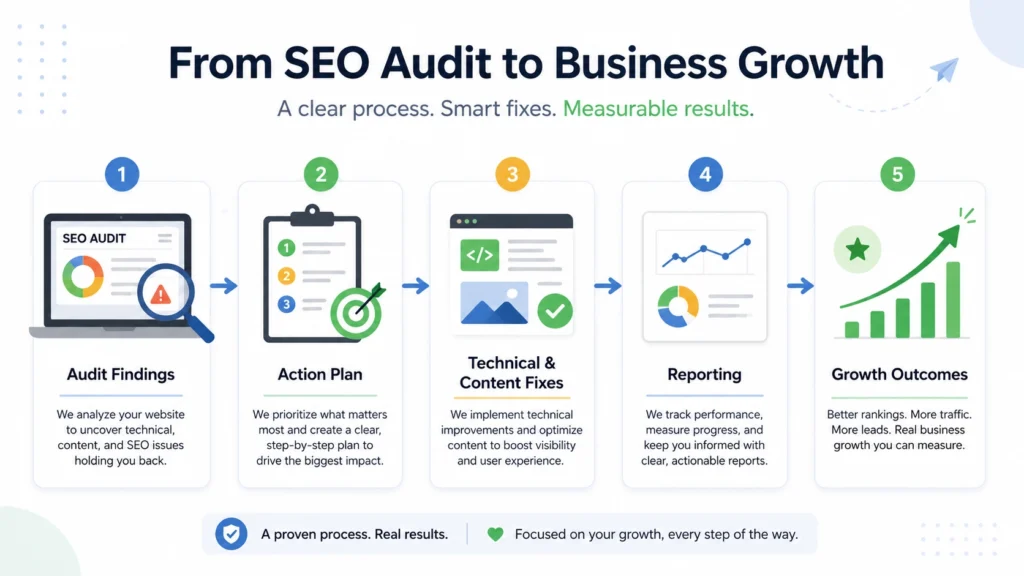
TL;DR: An SEO audit only becomes valuable when the findings lead to clear action, assigned tasks, and measurable improvements. The right implementation process helps businesses fix the issues holding back visibility, strengthen the pages that drive revenue, and keep the campaign moving with purpose.
Key Takeaways
- A useful SEO audit should focus on problems that affect rankings, traffic, leads, and sales.
- Prioritization helps teams fix high-impact issues first instead of getting lost in a long checklist.
- Strong execution connects technical SEO, content, on-page updates, reporting, and team ownership.
- The best SEO partner should show how recommendations become real work, not just another report.
Many businesses get an SEO audit, review the findings, and then leave the report untouched while traffic, leads, and sales stay stuck. That is why SEO audit and implementation services matter: they turn recommendations into real fixes and answer the question that matters most, “What happens after the audit?”
Why SEO Audits Get Stuck
An SEO audit can reveal crawl issues, thin pages, missing internal links, weak title tags, slow loading pages, duplicate content, broken redirects, poor local signals, or content gaps. These findings are useful, but findings are not fixed.
Audits often stall after the handoff, when the client gets a spreadsheet, and different teams receive tasks without enough context. A serious SEO campaign avoids that trap by treating the audit as the starting line, then turning the findings into clear, prioritized work.
Fixes Drive Rankings
Google does not reward a website because it has been audited. It responds to real improvements that make the site easier to crawl, understand, and use, such as:
- Better pages that match what customers are searching for
- Cleaner site structure that helps search engines find important content
- Stronger content that answers questions and builds trust
- Faster page experiences that keep visitors from leaving
- Useful links and clearer local signals that support visibility
The audit only matters when it leads to changes that search engines and customers can notice.
Where Your Website Is Losing Money
A strong audit looks at past surface-level errors and shows where the website is losing traffic, leads, or sales. For local businesses, that may mean weak local signals or outdated service pages, while ecommerce sites may struggle with messy category pages, thin product content, or slow performance.
The goal is not to list every issue just to make the audit look busy. It is to find the problems that hurt revenue and fix the ones that matter most.
What Audits Should Check
A practical audit checks the parts of your website that affect visibility, trust, and conversions. The point is not to treat every issue the same, but to spot what needs attention now and what can wait.
A useful audit should look at technical SEO, site performance, on-page optimization, content quality, internal links, backlinks, local visibility, conversion paths, and analytics tracking. Together, these areas show what is helping the website grow and what is quietly holding it back.
From Findings to Action Plan
After the audit, the next step is to decide what needs to happen first and why it matters. This is where the campaign starts to feel less like a report and more like a real plan.
Without clear priorities, SEO can turn into random tasks that look busy but do not prove much progress. A good execution plan gives every fix for an owner, a purpose, and a way to measure success.
Our SEO consulting and implementation support covers the move from audit findings to prioritized fixes, with responsibilities agreed before the work begins.
Prioritize What Moves Results
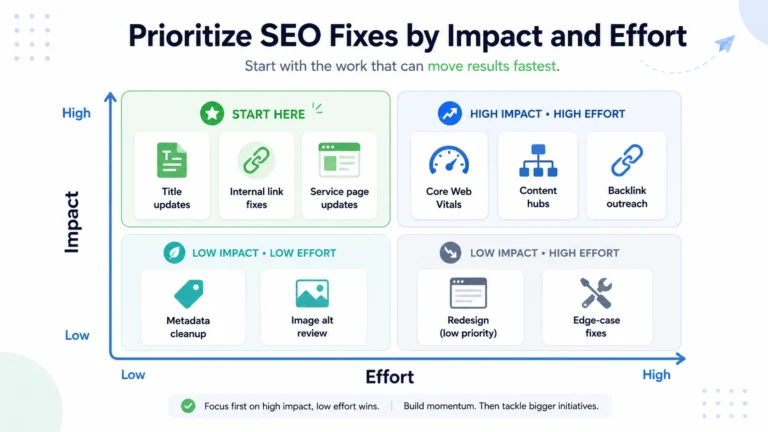
Most campaigns work better when SEO tasks are sorted by impact and effort. Quick high-value fixes should move first because they help build momentum without slowing the campaign down, such as:
- Fixing indexation problems
- Improving titles on money pages
- Repairing broken internal links
- Updating service pages
- Improving calls to action
Harder tasks like site speed fixes, content hubs, category page updates, local landing pages, or backlink outreach can come next when they support the bigger goal. This keeps SEO manageable because the team follows a clear roadmap instead of getting buried in a long checklist.
Keep The Campaign Moving
Even a strong SEO plan can stall if no one is clearly responsible for moving tasks forward. A campaign owner keeps the audit, content, technical fixes, and reporting connected, so the work does not get lost between teams.
This role also helps turn big recommendations into smaller tasks that people can actually finish. When someone tracks progress, follows up, and checks the results, the campaign keeps moving instead of fading after the first few weeks.
Start With Revenue Pages
Not every page deserves the same level of attention, so a smart SEO campaign starts with the pages most likely to bring in leads, sales, calls, bookings, or quote requests. For a local business, that may mean service and location pages, while ecommerce sites may focus on category pages, product pages, and buyer-focused content.
This is where SEO starts to feel practical because the work is tied to real customer action, not just rankings. The goal is to help the right visitor find the right page and feel ready to take the next step.
On-Page Fixes That Actually Matter
On-page implementation makes each important page clearer for both search engines and visitors. A strong service page should explain the offer, build trust, and guide the reader toward the next step.
- Clear page titles and headings
- Complete service details
- Smart keyword mapping
- Helpful internal links
- Useful FAQs
- Strong calls to action
Get Technical Fixes Moving
Technical SEO is often where campaigns slow down. The audit identifies crawl errors, duplicate URLs, redirect chains, poor Core Web Vitals, missing schema, mobile issues, or indexing problems. Then the tasks land with a developer who may not know which items matter most.
This is why implementation support is important. A good SEO team does not simply throw technical notes over the wall. They translate problems into clear instructions, explain the business impact, check the work after it is done, and verify that the fix works.
Turn Content Gaps Into Traffic
Content often carries the biggest upside after an audit. The audit may reveal missing topics, weak service pages, outdated blogs, duplicate articles, or pages that target the wrong keywords. But the fix is not always “publish more.”
Sometimes the better move is to improve what already exists. A page ranking on page two may need stronger examples, clearer structure, updated information, better internal links, or a more direct answer to the search intent. A service page may need proof, pricing context, process details, and FAQs.
Answer The Next Question
For commercial investigation intent, readers want to compare options and understand the process, value, deliverables, risks, and fit before deciding. Content should show how SEO work moves from strategy to technical fixes, content updates, reporting, and campaign management, so the reader knows who to trust.
Reporting That Shows Real Progress
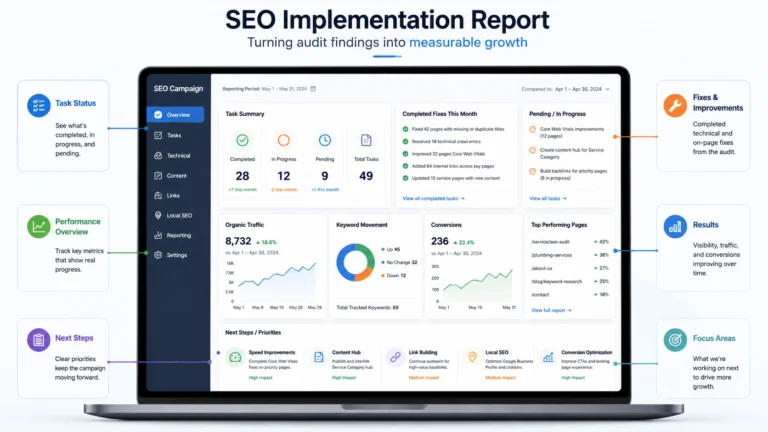
Once implementation begins, reporting becomes part of the campaign. A useful report shows what was done, what changed, what improved, what still needs attention, and what comes next.
Important metrics may include organic traffic, keyword movement, impressions, clicks, indexed pages, local visibility, conversions, leads, calls, and revenue where tracking allows it. The best reports connect SEO actions to business outcomes.
Questions To Ask Before Hiring
Before hiring a provider, ask how they turn audit findings into real fixes, content updates, technical improvements, and measurable next steps. This helps you separate report sellers from campaign partners who can move the work forward.
Ask to see a sample audit, how tasks are prioritized, and how they handle technical SEO, content, local SEO, backlinks, reporting, and team coordination. Also ask what they need from you to keep the campaign moving faster.
Why KeyforgeSEO Fits The Job
KeyforgeSEO is a good fit for businesses that want practical SEO support without bloated costs. It serves small businesses, local brands, ecommerce websites, global companies, and agencies looking for reliable SEO outsourcing from the Philippines.
KeyforgeSEO supports audit-to-execution work through technical SEO, content strategy, local SEO, link building, web design, Google Ads, and SEO outsourcing. Businesses that need hands-on support can explore its affordable SEO services in the Philippines to turn audit findings into real fixes and long-term growth.
Turn Your SEO Audit Into Action
If your website audit has not turned into action yet, KeyforgeSEO can help close the gap for local businesses, international brands, and agencies that need dependable execution.