
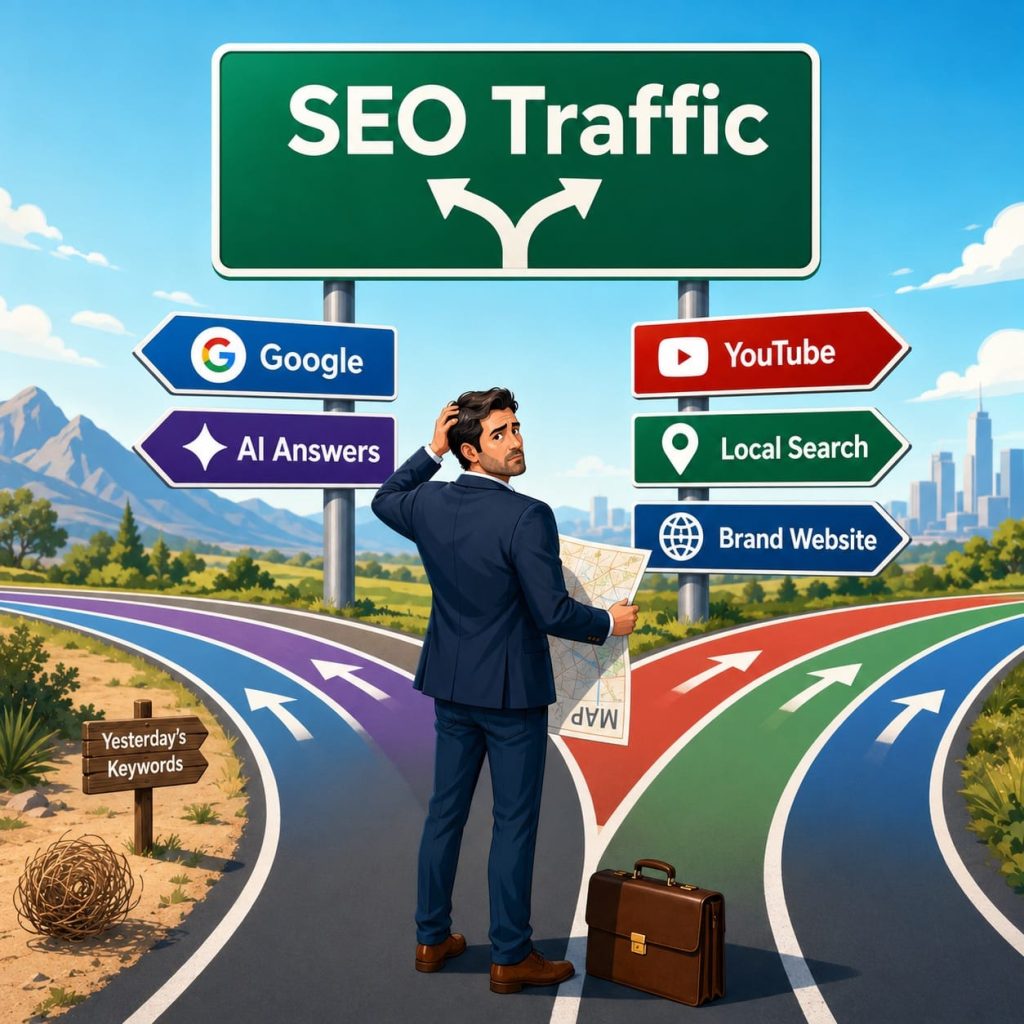
Search behavior is changing fast, especially as more people use AI tools alongside Google. But the latest data suggests a more useful story than “SEO is dead.”
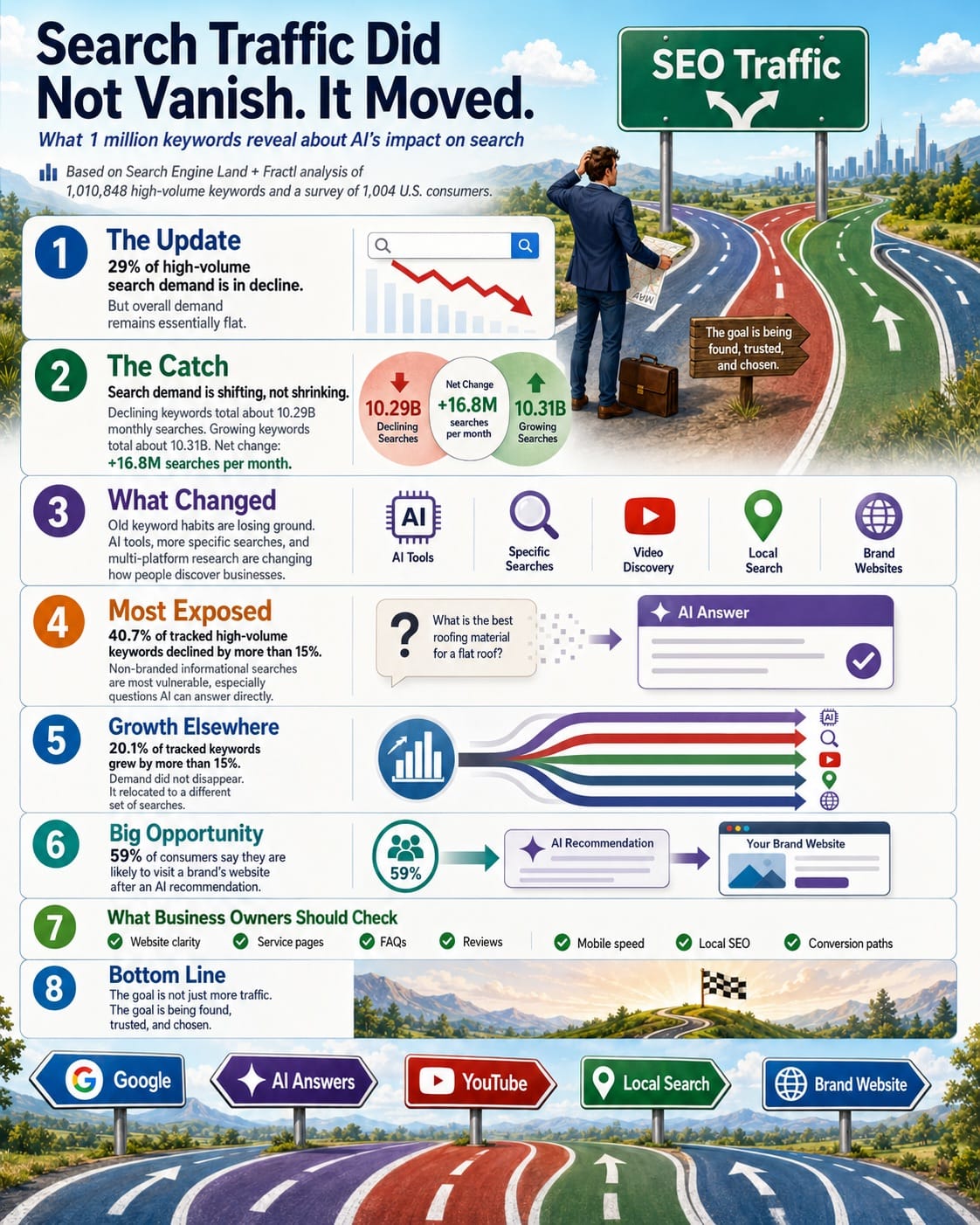
A Search Engine Land and Fractl study reviewed more than 1 million high-volume keywords and found that 29% of high-volume search demand is in decline. That sounds alarming at first. The more important finding is that overall demand is being redistributed. In plain English: people are still searching, but they are not always searching the same way.
What changed?
The study found that some keywords are losing search volume while others are gaining it. Informational searches are more exposed because AI tools can answer many of those questions directly. Non-branded searches are especially vulnerable because the user is not looking for a specific company yet.
That matters for local businesses, service businesses, ecommerce brands, and professional firms. If your SEO strategy is built around old keyword assumptions, you may be optimizing for searches that no longer carry the same demand.
Why this matters for business owners
A traffic drop does not automatically mean your website is failing. It may mean customer behavior has changed.
People may now:
✅ Ask AI tools for recommendations
✅ Search more specific questions
✅ Compare brands across several platforms
✅ Use YouTube, Reddit, social platforms, and Google together
✅ Visit your website only after seeing your brand mentioned elsewhere
The study also found that 59% of consumers say they are likely to visit a brand’s website after an AI chatbot mentions or recommends it. That means your website still matters, but it may enter the buyer journey at a different point.
What this means for your website
Your website needs to do more than exist.
It needs to support search visibility, AI visibility, and conversion. That means your pages should clearly explain who you help, what you offer, where you serve customers, why you can be trusted, and what someone should do next.
Thin service pages are going to struggle. So are vague homepages that say a lot without answering real customer questions.
Strong pages should include:
✅ Clear service descriptions
✅ Location and service area details
✅ Helpful FAQs
✅ Proof such as reviews, case studies, examples, or credentials
✅ Fast mobile performance
✅ Simple calls to action
✅ Content that answers the questions customers actually ask
What to do next
Start by reviewing your current search visibility. Look for pages or keywords that have lost impressions, clicks, or conversions. Then compare that with the questions customers are asking today.
Good questions to ask include:
✅ Which services still bring qualified leads?
✅ Which pages get traffic but no inquiries?
✅ Which customer questions are missing from the site?
✅ Which pages sound generic or outdated?
✅ Where could we add proof, clarity, or stronger calls to action?
Do not chase every AI trend. Focus on the basics that make your business easier to find and easier to trust.
The takeaway
Search is changing, but customers still need answers. They still compare options. They still check websites before making decisions.
The businesses that win will not be the ones chasing every new tactic. They will be the ones with clear, useful, trustworthy websites that match how people search now.
If your website has not been reviewed recently, this is the moment to look at it with fresh eyes. Better SEO starts with understanding where demand has moved, then improving the pages that help customers find you, trust you, and contact you.