
Search visibility used to feel easier to measure.
You checked your rankings. You looked at keyword volume. You reviewed your traffic. You ran a website audit. If the numbers looked good, the SEO campaign probably looked healthy.
That picture is now incomplete.
The old SEO toolset still matters, but it does not capture the full way people find and evaluate businesses anymore.
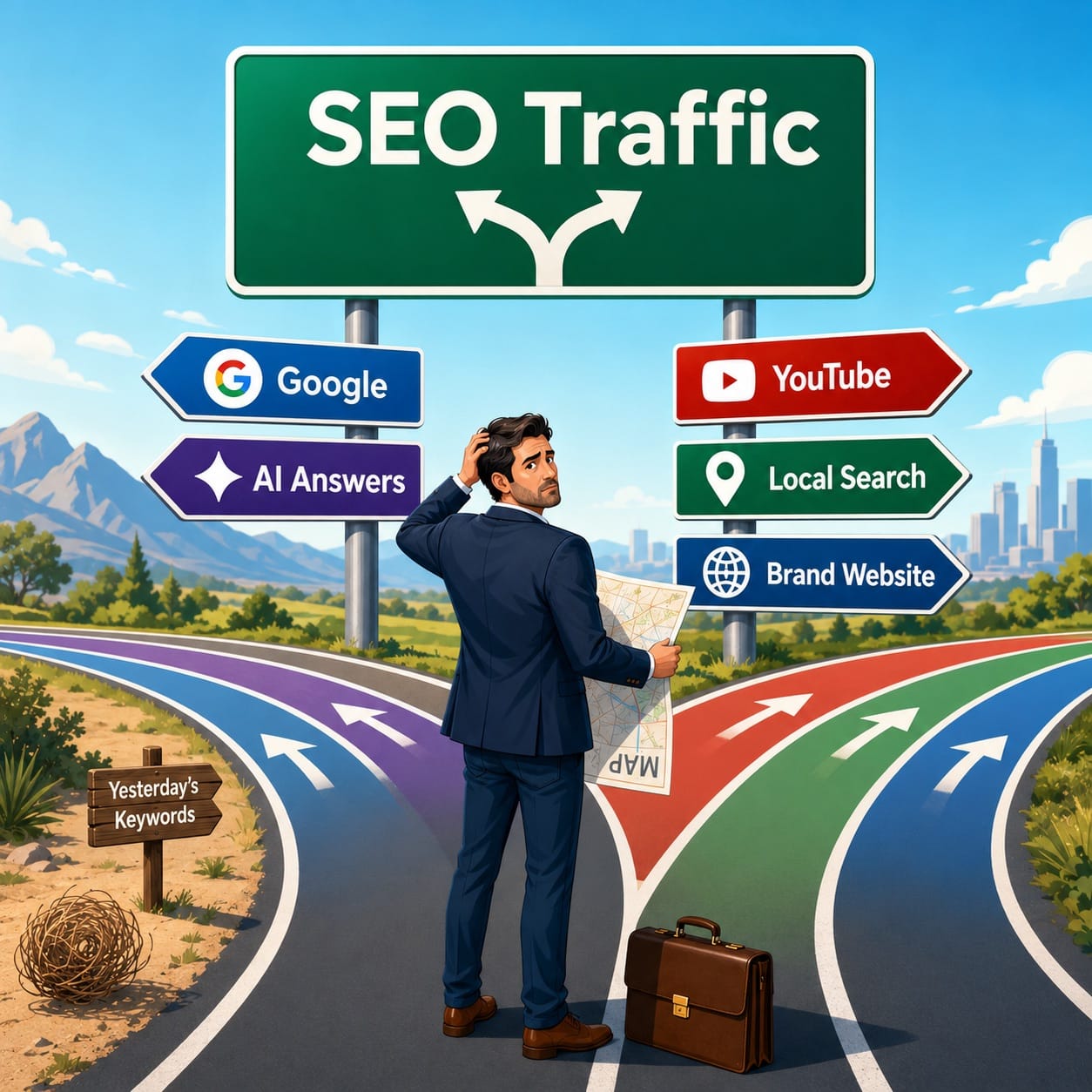
Today, search visibility can happen across Google rankings, AI Overviews, local packs, shopping modules, AI assistant responses, map results, and search pages where users get answers without clicking through immediately.
For business owners, the practical takeaway is simple: your website and SEO strategy need to be judged by more than rankings.
Classic SEO tools were built around a familiar model:
Those are still important.
The problem is that search results are no longer just a list of blue links.
A customer might now see an AI summary before they see your website. They might compare local businesses inside a map result. They might ask an AI tool for recommendations. They might see your brand mentioned, summarized, or skipped entirely before they ever reach your homepage.
Search Engine Land points out that rankings have fragmented across newer search surfaces, including AI Overviews, local packs, shopping carousels, and other result types.
That matters because a business can look “fine” in a traditional ranking report while still losing attention in the places customers now spend time.
Most business owners do not need more SEO jargon. They need to know whether their website is helping them get found, trusted, and contacted.
The new search environment raises better questions:
This is where web design, SEO, and conversion strategy overlap.
A slow website can hurt trust. A vague service page can weaken visibility. A weak call to action can waste good traffic. Thin content can make it harder for search engines and AI tools to understand why your business should be included.
Start with your most important pages.
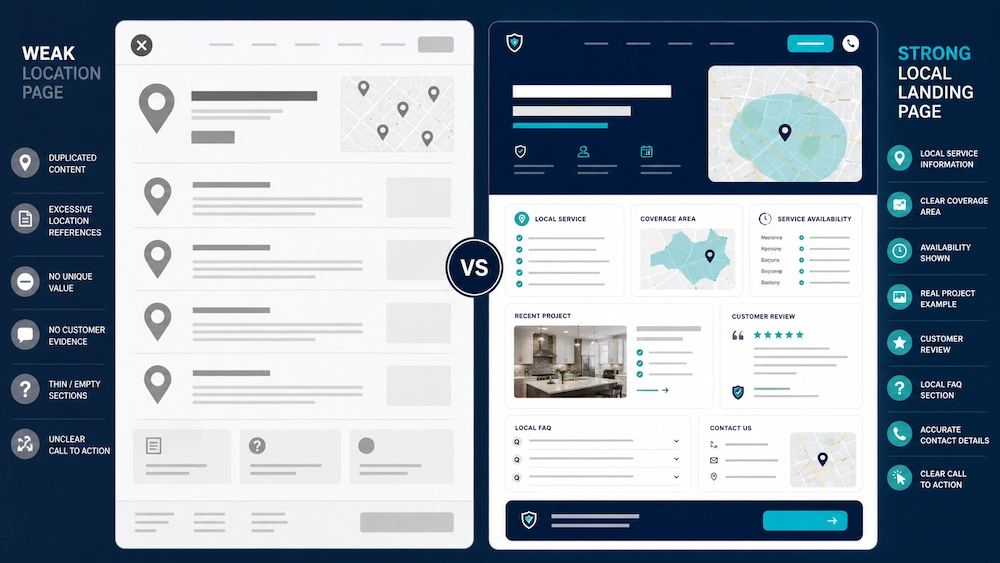
These are usually your homepage, main service pages, location pages, contact page, and any pages that bring in leads.
Look for gaps such as:
Then look beyond the page itself.
Search your business category the way a customer would. Check map results. Review what appears in AI summaries where available. Look at competitors that show up more often than you. Compare how clearly their websites explain services, locations, pricing signals, trust points, and next steps.
You are not just trying to “rank.”
You are trying to become the obvious choice.
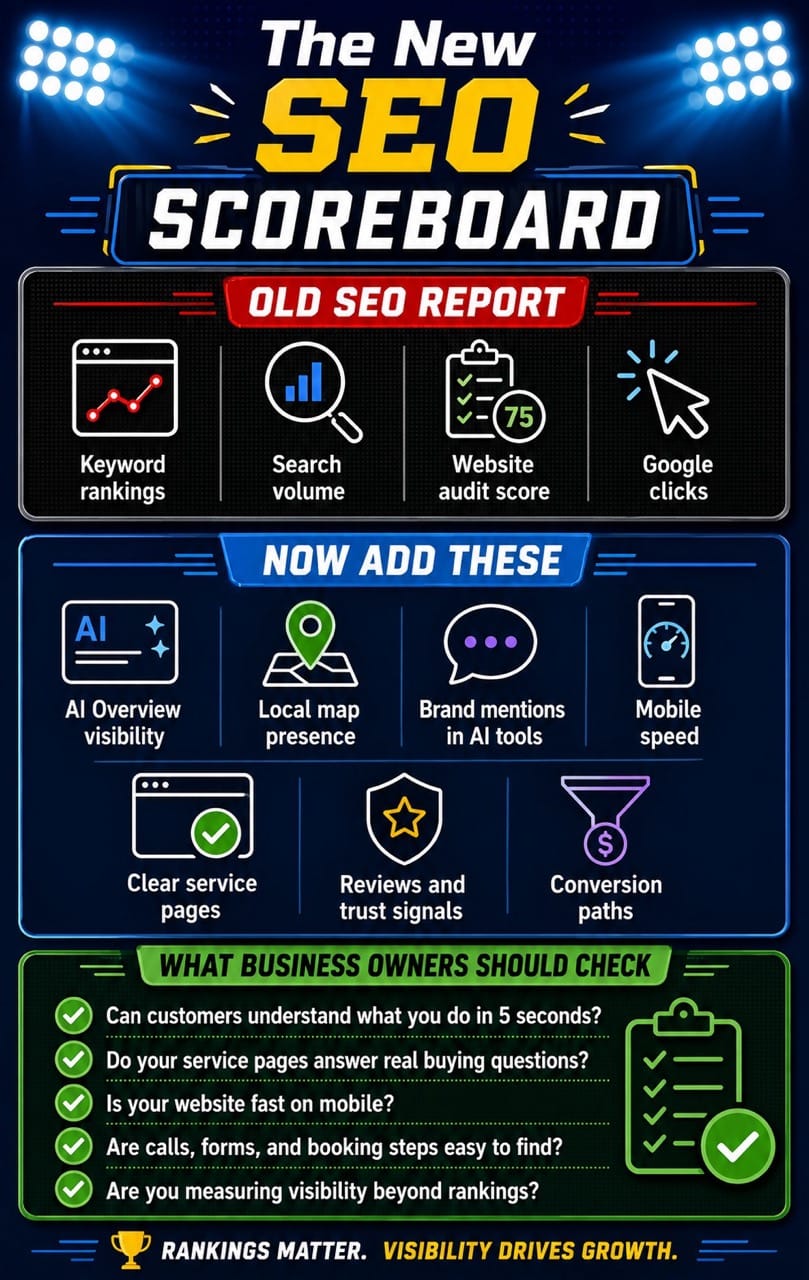
The strongest SEO strategies now connect four things:
If you have not reviewed your website recently, now is a good time to look at it with a wider lens.
Do not only ask, “Are we ranking?”
Ask:
The businesses that adapt fastest will not be the ones chasing every SEO trend. They will be the ones with clear websites, strong service pages, clean technical foundations, useful content, and simple paths for customers to take action.
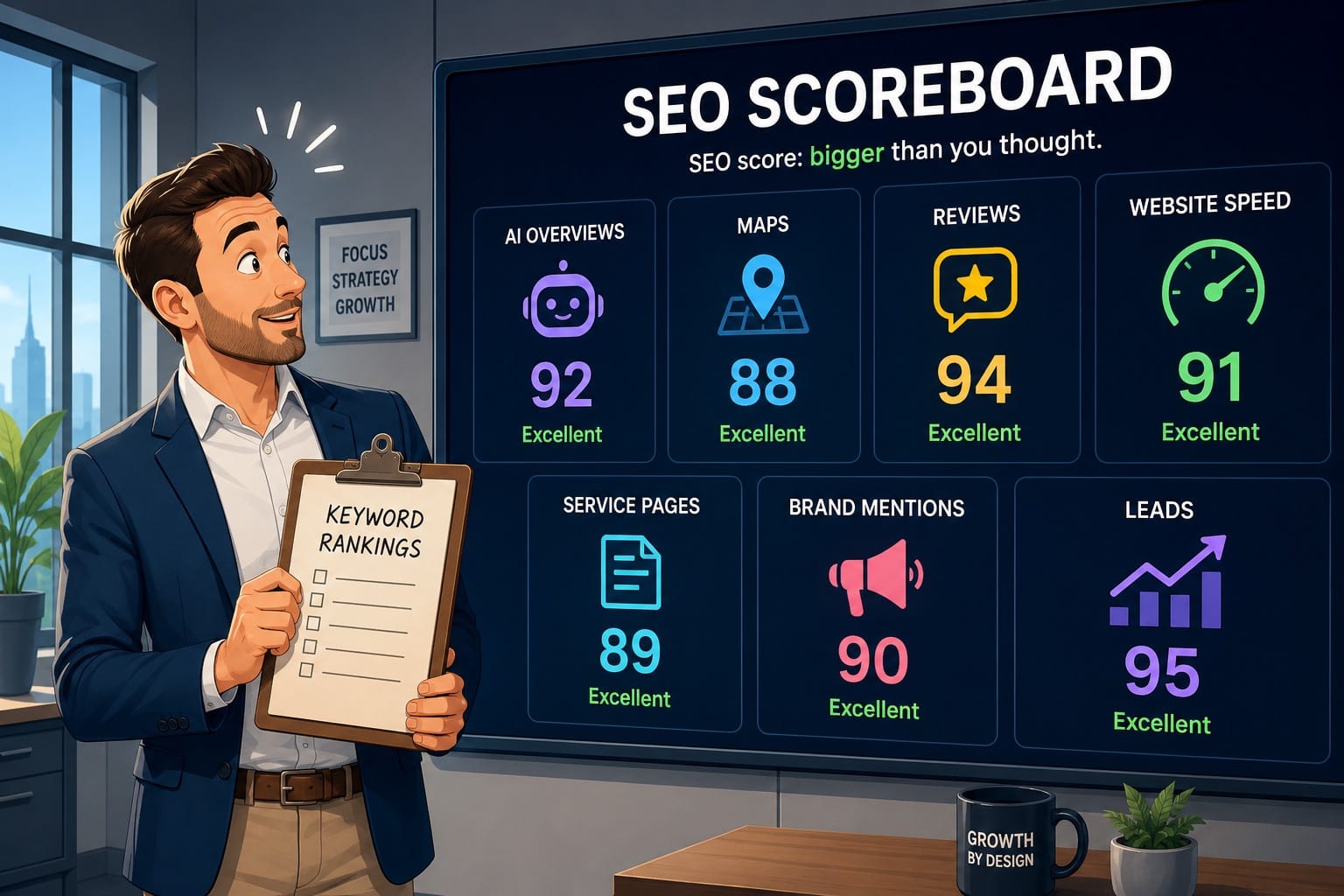
The SEO scoreboard has changed.
Your website should be ready for the bigger game.