
Local Landing Pages Need Value, Not More Keywords
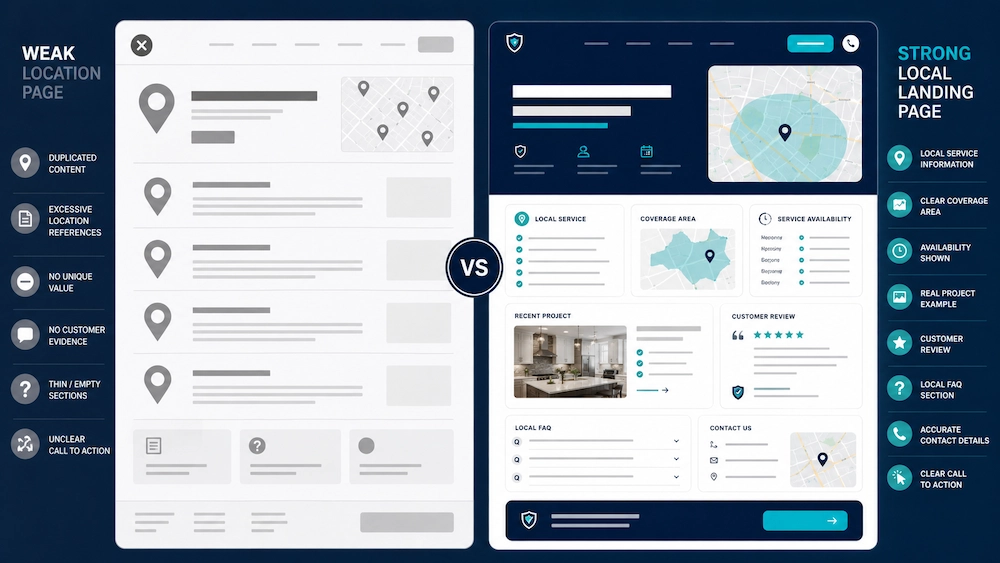
TLDR: Strong local landing pages focus on real customer needs, accurate service details, and genuine local proof. Each page should serve a clear purpose, provide useful location-specific information, and help visitors take the next step without relying on copied content or keyword stuffing.
Key Takeaways
- Create pages only for locations with real demand and business relevance.
- Use local examples, reviews, FAQs, and service details to build trust.
- Treat templates as flexible frameworks, not copy-and-paste content.
- Audit weak pages and improve, merge, or remove those without a clear purpose.
Local landing pages can be powerful tools in a local SEO strategy because they show where a business operates and what services are available in each area. When done well, they help improve search visibility and make it easier for nearby customers to take action.
Many businesses copy the same content across pages and only change the city name, which creates weak pages. Strong local landing pages focus on answering real questions from customers in each location instead of relying on repeated, generic content.
Thin Location Pages Underperform
Thin content is not just about word count but about lacking original value, so even long pages can feel empty when they repeat content found elsewhere on the site. This is common with location pages that only change the city name.
City Name Alone Won’t Cut It
A page is not locally useful just because it mentions a location; customers need to know how the business serves their area. They need clear details on availability, coverage, timelines, and any limits, or the page feels like a placeholder.
More Pages, Less Impact
Publishing many local landing pages may seem effective, but weak pages often compete, go unindexed, or attract little traffic. A smaller set of well-researched, purposeful pages with useful content usually performs better than hundreds of copied location pages.
Pick Locations That Truly Count
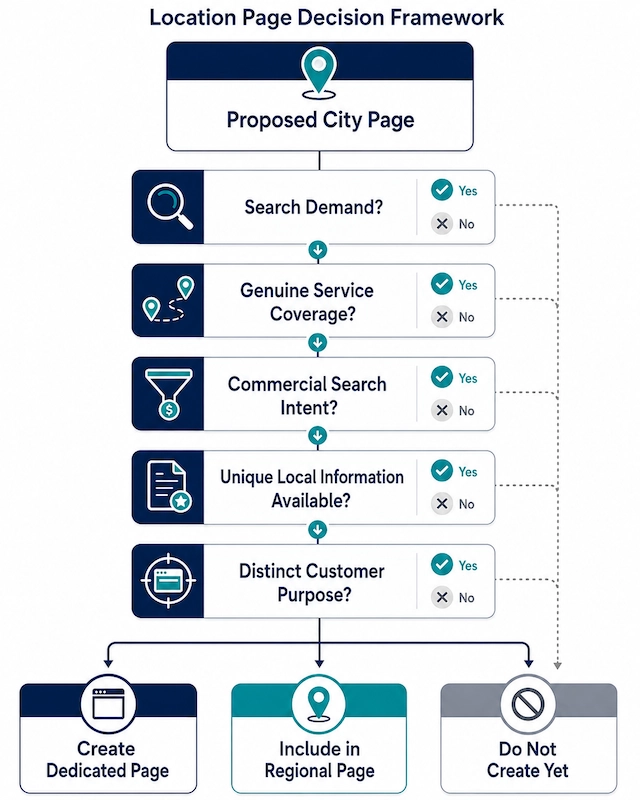
Choose only locations that truly need their own pages based on demand and relevance. Focus on areas where the business already has customers or can realistically provide services, and where there is clear search demand to justify creating a dedicated page.
Target Real Search Intent
Search demand should guide page creation, with high-demand areas getting their own page and low-demand ones grouped regionally. Also consider intent, as ready-to-book searches deserve more focus than general queries.
Physical Location vs Service Area
A business with a real location provides different information than one that travels there, so pages should reflect this clearly to maintain trust:
- Physical location pages: address, opening hours, directions, nearby landmarks, photos, parking details, staff information
- Service-area pages: coverage areas, availability, travel arrangements, response times, types of work completed
Win Local Customers on Every Page
Useful local landing pages should help customers make informed decisions by going beyond a general explanation of the service. Focus on what someone in that specific location needs to know before reaching out to a provider.
How the Service Works Locally
Operational details help customers understand how the service works locally, such as schedules or availability. These details show that the business has considered local needs and give visitors clearer expectations before they enquire.
Solve Real Local Problems
Local challenges can make a page more useful, such as weather issues or service needs in busy areas. This information should be based on real experience or relevant sources, not random facts.
Make the Next Step Clear
The call to action should match what local customers need, such as a call, visit, booking, or service check. A clear next step reduces uncertainty, builds confidence, and makes it easier for visitors to act, especially on mobile devices.
Add Local Detail Without Fluff
Local relevance should come from useful information rather than stuffing content with landmarks, road names, or long neighbourhood lists. A strong page should feel familiar to someone in the area without reading like a directory.
Use Genuine Work Examples
Real examples help local landing pages stand out, such as a nearby project, common request, or result in the area. These examples should briefly show the problem, solution, and outcome to build credibility and demonstrate local experience.
Use Proof to Support Your Claims
Testimonials, reviews, photos, and local partnerships can strengthen a location page. Local proof builds credibility and helps customers feel confident before reaching out.
Mention Nearby Areas Naturally
Neighbourhoods and nearby cities can be listed to clarify service coverage, especially when customers often ask if their area is included. However, long lists of place names can hurt readability and feel like keyword targeting.
Repeat Without Repeating
Businesses with many locations need an efficient process. A template can help maintain consistency, but it should be treated as a framework rather than finished content.
Keep Core Details Consistent
Some details will be the same across pages, such as the service process, standards, warranties, payment options, and policies. Repeating facts is fine, but duplicating paragraphs with only location changes weakens content quality.
Customise Local Sections
The most important sections to tailor include:
- Local customer concerns
- Service availability
- Areas covered
- Project examples
- Testimonials
- Frequently asked questions
- Travel or delivery details
- Local calls to action
These sections give each page a clear purpose while helping avoid competition between pages for the same broad keyword.
Write for People First
Keywords should appear naturally without overuse or awkward repetition. Search engines need clear signals, and customers need useful answers, so good content balances both with clear language and a focused topic.
What Makes a Local Page Stand Out
1. A Strong Local Intro
The opening should clearly state the service and location while explaining why the page matters to someone in that area. Avoid generic introductions and give visitors a clear reason to keep reading.
2. Relevant Service Information
Explain which services are offered, who they are for, and how the process works. This section should answer practical questions rather than repeat the main service page word for word.
3. Local Evidence and Experience
Include examples, customer feedback, photos, or specific experience that show the business’s connection to the area. These details help build trust, reinforce authenticity, and clearly demonstrate strong local credibility.
4. Frequently Asked Questions
FAQs should answer real customer questions about coverage, pricing, scheduling, and availability. Reusing generic FAQs across pages misses local concerns.
5. Clear Contact Details
Ensure phone numbers, addresses, hours, and service details are accurate to avoid confusion and build trust. Physical locations should match listings and maps, while service-area businesses should clearly explain how they serve customers.
Avoid Weak SEO Shortcuts
Shortcuts can weaken location pages, especially when businesses use fake offices, unchecked AI facts, or copied reviews. Avoid doorway pages and do not target areas you cannot serve, as these lead to poor customer experiences.
Audit Existing Pages
Businesses with many city pages should review them before expanding by comparing pages for repetition and checking performance, traffic, and enquiries. Some pages may need to be expanded, merged, or removed if they serve no clear purpose, so each page earns its place.
How Keyforge SEO Builds Better Location Pages
Keyforge SEO helps businesses build local search strategies based on real value, not recycled content. It focuses on creating pages that are useful to customers, aligned with actual search demand, and tied to clear business goals.
Its work covers local keyword research, location page planning, on-page SEO, technical improvements, and Google Business Profile support. For businesses targeting multiple cities or service areas, it builds a clear structure that supports growth without sacrificing content quality.
Build Local Pages People Trust
Your local landing pages should do more than name a city and repeat a service. They should answer local questions, show experience, and explain how your service works. Keyforge SEO can help you build stronger location pages without thin or duplicated content.
Contact Keyforge SEO now!