
Google AI Overviews Are Showing Up for Brand Searches. What Does Google Say About Yours?
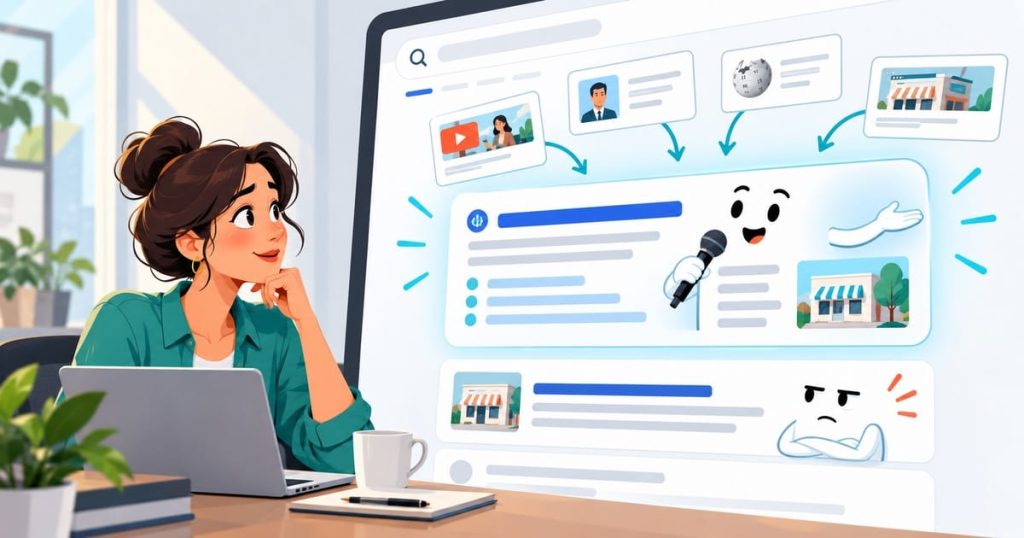
For years, searching a company name was the predictable part of Google. The official website usually led the page, followed by familiar profiles, reviews, and directory listings.
That comfortable corner of search is changing.
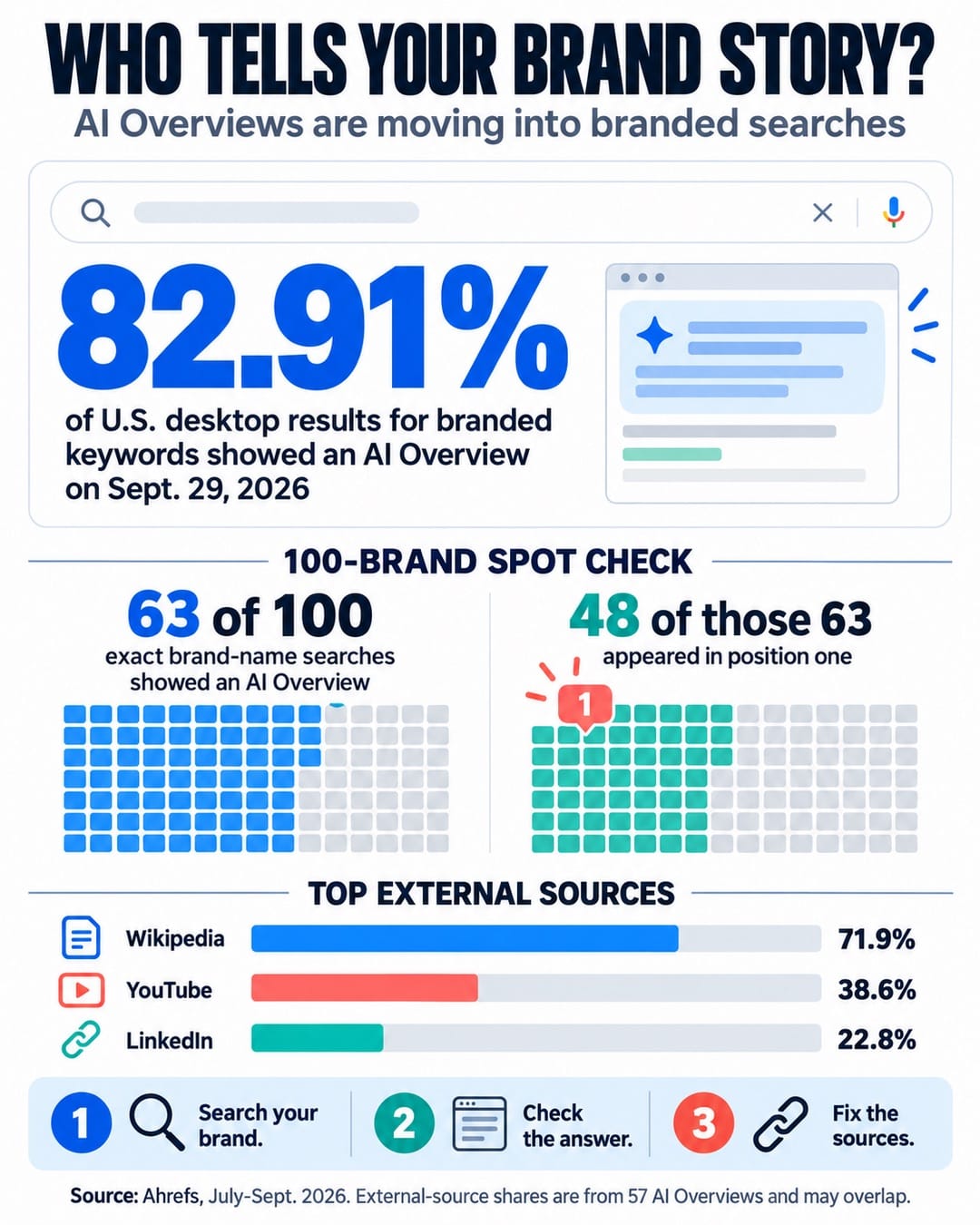
Ahrefs recently found AI Overviews in 82.91% of U.S. desktop results for branded keywords on September 29, 2026. The monthly average rose from 61.3% in July to 73.3% in September.
A separate panel tracked exact-name searches for 100 global brands. On July 1, only five of 98 usable results showed an AI Overview. By September 30, 63 of 100 did. Of those 63 AI Overviews, 48 appeared in position one.
The findings do not mean 82.91% of all searches for every business now show an AI Overview. The study examined U.S. desktop results, while the exact-name panel focused on major global brands. Results can vary by date, device, location, and user.
Why branded search matters
A branded search often happens late in the buying process. Someone may have received a referral, seen an advertisement, passed a storefront, or encountered a social post. They search the business name to confirm what it does, judge whether it looks credible, and decide what to do next.
An AI Overview can now sit inside that decision. It may summarize the business before the customer opens the official website. A strong answer can reinforce trust. A vague, dated, or inaccurate answer can create doubt at exactly the wrong moment.
Ranking for the company name still matters, but the information on the site must also be clear enough for search systems to understand and verify. Service descriptions, locations, credentials, policies, and company details should agree across every page that discusses the business.
Other websites may help write the answer
Ahrefs reviewed the outside domains cited in 57 AI Overviews from its 100-brand panel. Wikipedia appeared in 71.9%, YouTube in 38.6%, and LinkedIn in 22.8%. One answer could cite several sources, and some cited YouTube or LinkedIn pages may have been controlled by the brand.
For a local business, relevant sources may include its Google Business Profile, trade directories, chamber listings, local publications, professional profiles, partner pages, review sites, and video channels.
Your website remains the main source you control. It is simply no longer the only page shaping the customer’s first impression.
Run a branded-search audit
Start by searching your exact business name. Check a logged-out window and the devices your customers commonly use. If an AI Overview appears, save a screenshot and record the date.
Read the answer as a prospective customer would. Does it describe the right services? Is the service area correct? Are important qualifications missing? Does it sound like the business today or a version from three years ago?
Next, open every cited source. Correct company profiles, directory listings, and video descriptions you control. When an outside page is materially wrong, contact its publisher with a specific correction and supporting evidence.
Finally, inspect your website. Strengthen the About page, service pages, location pages, team profiles, case studies, and contact information. Put important facts in visible page copy rather than only in images or scripts. Add suitable structured data only when it accurately matches what visitors can see.
What to measure
Track branded clicks and impressions in Google Search Console, organic conversions in analytics, calls, form submissions, and changes in the wording or sources used by the AI Overview.
Ahrefs did not measure how many clicks these branded AI Overviews gained or lost. The study also did not identify how often each company’s website was cited. The sensible response is an audit, not panic.
Wherever Google looks, it should find the same accurate account of who you are, what you do, where you work, and why customers should trust you.